
Email Us

SMT Troubleshooting

Unstable Inspection Flow and Recovery Problems – Causes, Risks, and Practical Solutions

Introduction

In modern SMT production lines, inspection machines such as SPI and AOI play a critical role in quality control.
However, unstable inspection flow and poor recovery handling are among the most common hidden causes of SMT line blocking, throughput loss, and operator frustration.

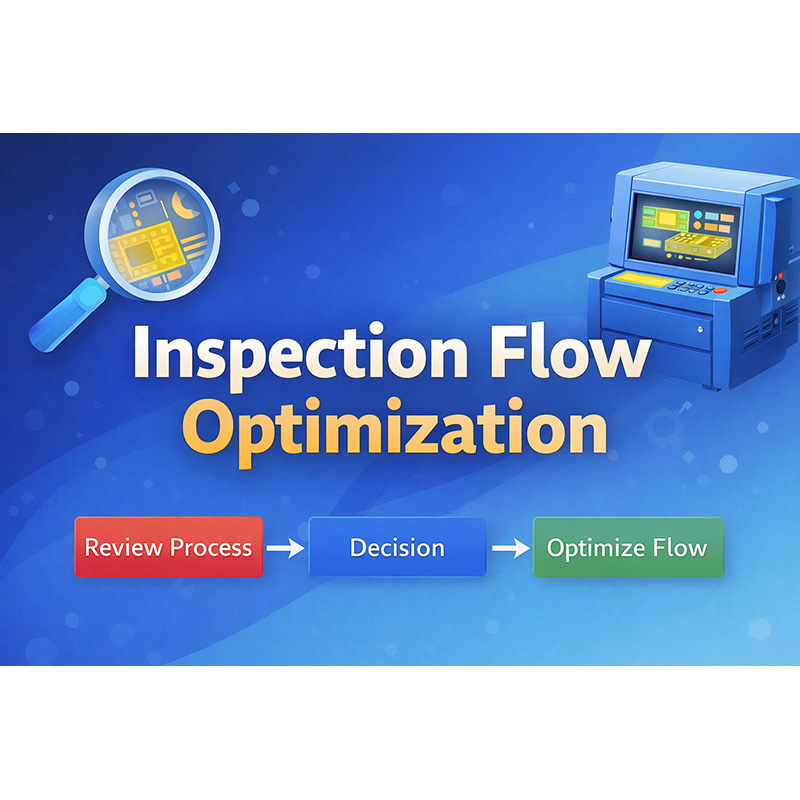
This article explains why inspection flow becomes unstable, how recovery problems occur, and what practical steps can stabilize your SMT inspection process.

Download
  • Product Details
  • Parameter
  • Video

Introduction

In modern SMT production lines, inspection machines such as SPI and AOI play a critical role in quality control.
However, unstable inspection flow and poor recovery handling are among the most common hidden causes of SMT line blocking, throughput loss, and operator frustration.

This article explains why inspection flow becomes unstable, how recovery problems occur, and what practical steps can stabilize your SMT inspection process.


What Is Unstable Inspection Flow?

Unstable inspection flow refers to a situation where:

  • Inspection cycle time fluctuates significantly

  • Boards accumulate before or after SPI / AOI

  • Inspection results cause frequent line stops

  • Manual intervention is required repeatedly

Even when placement machines run smoothly, unstable inspection flow can disrupt the entire SMT line.


Typical Symptoms of Inspection Flow Problems

Common warning signs include:

  • AOI or SPI frequently switching between run and wait status

  • PCB backlog at inspection infeed or outfeed

  • Excessive false calls requiring manual review

  • Difficulty resuming automatic mode after alarms

  • Inconsistent inspection takt time

These symptoms often indicate process instability rather than machine failure.


Main Causes of Unstable Inspection Flow

1. Over-Aggressive Inspection Settings

Excessive inspection parameters such as:

  • Very high resolution

  • Tight tolerance thresholds

  • Full inspection on low-risk areas

can dramatically increase inspection time and false call rates.


2. Poor Handling of Inspection Failures

Recovery issues often occur when:

  • No defined process for NG boards

  • Manual confirmation takes too long

  • Operators are unclear about recovery steps

This leads to frequent pauses and line blocking.


3. Mismatch Between Inspection Speed and Line Speed

Inspection machines often become bottlenecks when:

  • Placement speed increases without inspection adjustment

  • Product complexity changes

  • Inspection programs are not optimized per model


4. Inefficient Rework and Review Flow

Manual review stations placed incorrectly can cause:

  • Excessive walking distance

  • Board handling delays

  • Communication gaps between operators


5. Lack of Inspection Strategy

Many lines treat inspection as a fixed step rather than a controlled quality gate, resulting in unstable flow under changing production conditions.


Inspection Recovery Problems Explained

Inspection recovery problems usually involve:

  • Slow restart after false alarms

  • Unclear NG handling logic

  • Manual override misuse

  • Incomplete alarm acknowledgment

Poor recovery design amplifies the impact of even minor inspection issues.


How to Stabilize Inspection Flow

Optimize Inspection Parameters

  • Use risk-based inspection

  • Reduce unnecessary measurement points

  • Balance resolution with takt time

Standardize Recovery Procedures

  • Clear NG handling workflow

  • Visual instructions for operators

  • Defined escalation rules

Improve Line Balancing

  • Match inspection cycle time to placement output

  • Add buffering before inspection if needed

Enhance Operator Training

  • Focus on recovery efficiency

  • Reduce hesitation and incorrect actions


When to Upgrade Inspection Automation

If instability persists, consider:

  • Inline buffering solutions

  • Parallel inspection systems

  • Smart inspection scheduling

  • Integration with MES for data-driven decisions

👉 Explore our SMEMA / Automation Solutions and SMT Process Optimization services.


Conclusion

Unstable inspection flow and recovery problems are rarely caused by inspection machines alone.
They are the result of parameter imbalance, unclear recovery logic, and poor line integration.

Stabilizing inspection flow improves not only throughput, but also product quality and operator confidence.


Internal Linking Suggestions


Thomao Engineering Insight

Inspection should protect production quality,
not become the reason production stops.


CONTACT US
Welcome your presence, you can send us an email, we will get in touch with you within 24 hours.
Room 502, Building 3H, Quanzhi Technology Industrial Park, Bao'an District, Shenzhen, China
sales@thomao.com
0086-176 0765 6429