
Email Us

SMT Troubleshooting

PCB Not Transferring Between Reflow Oven and AOI – Causes and Solutions

PCB Not Transferring Between Reflow Oven and AOI – Causes and Solutions

Problem Description

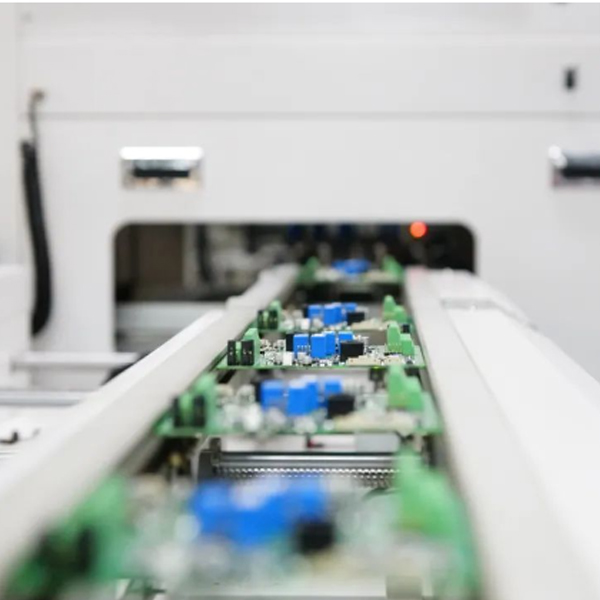
In many SMT production lines, PCBs fail to transfer smoothly between the reflow oven and the AOI machine.
Boards may stop at the conveyor exit, require manual intervention, or cause unexpected line downtime.

This issue is especially common when machines from different brands or generations are connected.

Download
  • Product Details
  • Parameter
  • Video

PCB Not Transferring Between Reflow Oven and AOI – Causes and Solutions

Problem Description

In many SMT production lines, PCBs fail to transfer smoothly between the reflow oven and the AOI machine.
Boards may stop at the conveyor exit, require manual intervention, or cause unexpected line downtime.

This issue is especially common when machines from different brands or generations are connected.

------------------------------------------------------------------------------------------------------------------------------------------------------------------------------

Why This Happens

Typical root causes include:

  • SMEMA signal mismatch between reflow and AOI

  • Conveyor height or width inconsistency

  • Incorrect board stop or sensor positioning

  • Timing mismatch between board ready and board available signals

  • AOI input buffer not properly configured

In most cases, the problem is not the main machines themselves, but the PCB transfer logic between them.

-------------------------------------------------------------------------------------------------------------------------------------------------------------------------------

Common Mistakes

Many factories attempt to solve this issue by:

  • Increasing conveyor speed

  • Adding operators to manually push boards

  • Replacing SMEMA cables without signal verification

  • Adjusting only one machine side

These actions may temporarily reduce symptoms but do not address the root cause.

------------------------------------------------------------------------------------------------------------------------------------------------------------------------------

Practical Solutions

A stable PCB transfer requires:

  • Verification of SMEMA signal logic on both machines

  • Matching conveyor speed and transfer timing

  • Correct positioning of sensors and board stops

  • Adding a short buffer or inspection conveyor if needed

  • Ensuring consistent PCB flow direction and clearance

System-level coordination is more important than individual parameter changes.

-------------------------------------------------------------------------------------------------------------------------------------------------------------------------------

When to Consider a System-Level Fix

If PCB transfer problems occur frequently or worsen after equipment changes, it may indicate a line-level automation issue.

👉 In such cases, please refer to our SMEMA & Automation Solutions for a structured and reliable approach to PCB transfer stability.

--------------------------------------------------------------------------------------------------------------------------------------------------------------------------------

This issue is part of a broader PCB transfer and line stability topic.
Please refer to our
SMT Troubleshooting Hub.


CONTACT US
Welcome your presence, you can send us an email, we will get in touch with you within 24 hours.
Room 502, Building 3H, Quanzhi Technology Industrial Park, Bao'an District, Shenzhen, China
sales@thomao.com
0086-176 0765 6429