
Email Us

Coating Production Solution

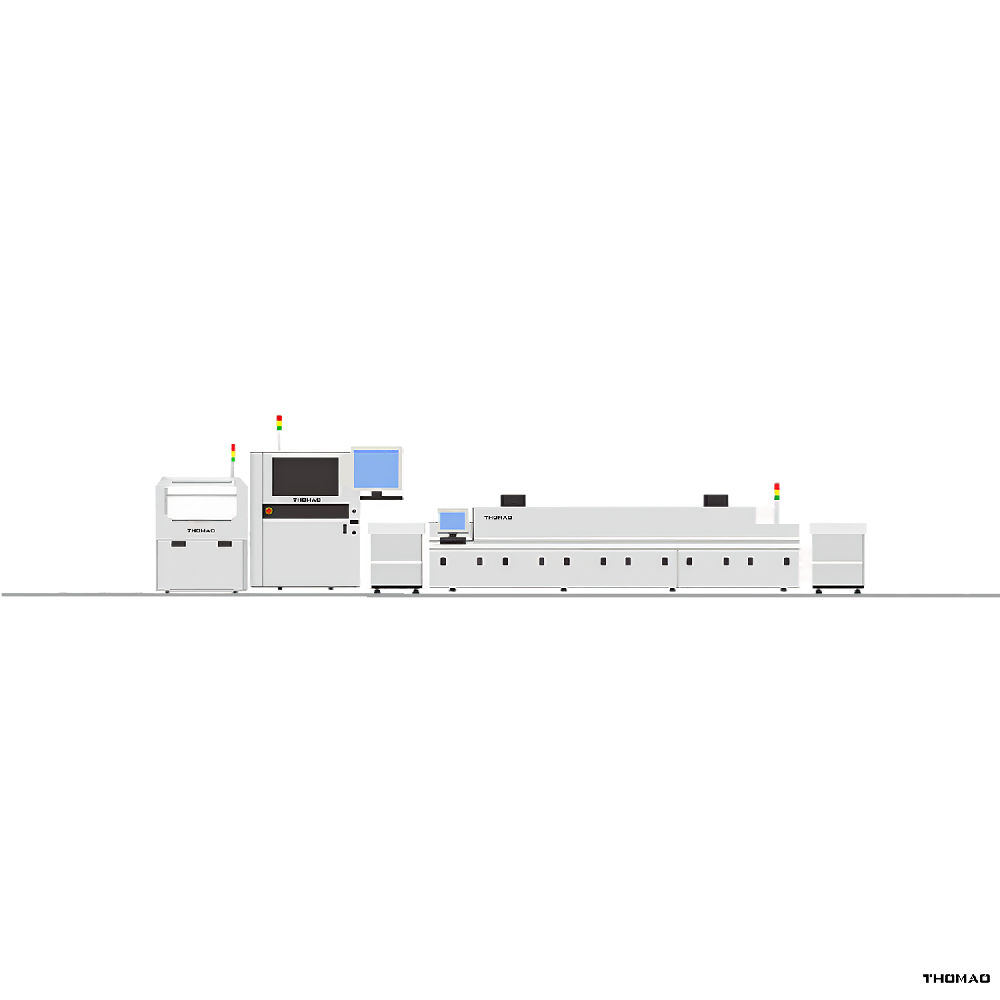
Conformal Coating Line

Conformal Coating Line 

Configuring a new conformal coating line is a delicate and highly specialized task. The coating process creates a protective film on the surface of PCBs, protecting them from environmental factors such as moisture, chemicals, dust, and stress, significantly improving product reliability and lifespan.


The following are detailed considerations for configuring a new conformal coating line.


Download
  • Product Details
  • Parameter
  • Video

Conformal Coating Line 

Configuring a new conformal coating line is a delicate and highly specialized task. The coating process creates a protective film on the surface of PCBs, protecting them from environmental factors such as moisture, chemicals, dust, and stress, significantly improving product reliability and lifespan.


The following are detailed considerations for configuring a new conformal coating line.


1. Preliminary Planning and Process Requirements Analysis

This is the foundation for determining the production line configuration and investment scale.


Coating Material and Process Selection (Primary Decision):


Coating Type: This must be determined based on the product application.

Acrylic: General-purpose, easy to rework, and inexpensive, but with average chemical resistance.

Polyurethane: Excellent moisture and chemical resistance, but difficult to rework.

Silicone: High and low temperature resistance and flexibility make it commonly used in automotive and high-temperature environments, but it is prone to silicone migration contamination.

Epoxy: High hardness and wear resistance, but high stress and almost impossible to rework.

UV/Light Curing: Fast curing, no solvents required, but difficult to cure in shadowed areas.

Coating Process: The material and process are closely linked.

Spraying: The most commonly used, efficient, and consistent.

Selective Spraying: Uses a moving valve needle to precisely spray unprotected areas. This is the mainstream choice for high-precision automation.

Atomized spray coating: Provides full coverage, suitable for applications where precision is not a priority.

Dip coating: Provides uniform, complete coating, but wastes material and requires fixtures for double-sided coating.

Brush coating: Used for repairs, small batches, or spot touch-ups, but suffers from poor consistency.

Vapor deposition: Used for the highest level of conformal coating, but requires expensive equipment.


Product and quality requirements:

Application areas: Automotive electronics, aerospace, military, and outdoor electronics have extremely stringent coating requirements and standards (such as IPC-CC-830B and MIL-I-46058C).

Areas to be protected: Accurately identify the components and circuits that require coating.

Areas to be protected: More critical! Clearly identify areas that cannot be coated, such as connectors, test points, gold fingers, heat sinks, and batteries.

Coating thickness requirements: Different standards have different levels (e.g., IPC Level 1 is thin, Level 3 is thick) and thickness ranges (typically 30-130μm). This directly determines process parameters and equipment accuracy.


Production Capacity and Automation Level:

Output: High-volume production requires full automation, while small batches with a wide variety of products can consider semi-automatic or manual processes.

Precision and Consistency Requirements: High-reliability products must utilize selective automated spraying to ensure uniform thickness and precise avoidance.


II. Core Equipment Selection and Technical Considerations

Coating Equipment (Core):


Selective Coating Machine:

Motion System: A high-precision XY gantry or robotic arm ensures accurate valve pin positioning.

Coating Valve: The core of the core. Focus on its start-stop response speed, drip resistance, and adaptability to materials of varying viscosities. Ultrasonic valves are currently the mainstream in high-end equipment, enabling extremely fine spray paths and instantaneous start and stop.

Vision System: Highly recommended. Used for PCB positioning (compensating for incoming material deviation), component recognition, and automatic identification of areas requiring avoidance, significantly improving accuracy and line changeover efficiency.

Programming Software: Is it easy to program offline? Can Gerber or CAD files be directly imported to generate coating paths? This can significantly shorten new product introduction time.


Curing Equipment:


Material Selection:

Hot Air Curing Oven: Used for most solvent-based coatings, requiring stable temperature zones and time control.

UV Curing Oven: Used for UV-curing coatings, offering high speeds but ensuring that all areas are exposed to UV light.

Moisture Cure: Some silicone and polyurethane coatings cure by absorbing moisture in the air, requiring only a standing area.

Secondary Cure: Some materials require a preliminary UV cure followed by a full hot air cure.


Pre- and Post-Processing Equipment:


Pre-Processing:

Plasma Cleaner: Highly recommended for high-reliability products. It thoroughly cleans the PCB surface, removing organic contaminants and improving surface energy, significantly improving coating adhesion and reducing defects such as "shrink" and "fisheyes."

Bake Oven: Used to remove moisture from PCBs and components.


Post-Processing:

Blanking/Curing Tray: Used to support coated boards during the curing process.


III. Supporting Facilities and Production Environment


Workshop Environment:

Cleanliness: Extremely high dust-free requirements (Class 10,000 or higher recommended). Even a speck of dust can cause coating defects and pinholes.

Temperature and Humidity Control: Strict temperature and humidity control (e.g., 23±2°C, 50%±5% RH) is crucial for coating viscosity, leveling, and the curing process.

Explosion-Proof and Ventilation: Most coatings contain flammable and explosive solvents. The coating and curing areas must have independent forced exhaust systems and explosion-proof electrical equipment. This is a safety red line.


Material Management:

Paint Storage: Storage must be carried out in accordance with the Material Safety Data Sheet (MSDS). Fireproof cabinets are typically required, protected from direct sunlight.

Viscosity Control: A viscometer is used to regularly measure and adjust paint viscosity, a critical process parameter for ensuring coating thickness.

Filtration System: The feed system must be equipped with precision filters to prevent particles from clogging the spray valves.


IV. People, Software, and Management


Team Skill Requirements:

Process Engineers: Must be proficient in the relationship between coating material properties, process parameters (pressure, speed, flow rate, trajectory overlap, etc.), and coating quality, and be able to perform defect analysis and design-of-element (DOE) optimization.

Programmers and Operators: Requires proficiency in CAD and CAM software and the ability to efficiently program and optimize paths.

Maintenance: Able to maintain precision motion systems and coating valves, performing routine cleaning and maintenance.


Process Control and Documentation:

Parameter Standardization: Establish standard coating procedures and curing profiles for each product and material.


First Article Inspection and Process Monitoring:

Thickness Measurement: Use a wet film thickness gauge or dry film thickness gauge (e.g., eddy current gauge) for real-time monitoring.

Coverage Inspection: Use a UV lamp (for coatings containing fluorescent agents) to check coverage integrity and contamination.

Adhesion Testing: Perform regular cross-hatch adhesion tests to ensure coating reliability.

Strict Equipment Maintenance: Clean valves, needles, and filters daily and weekly to prevent curing blockage.


Conformal Coating Line Configuration Comparison

Configuration SchemeCore EquipmentApplicable ScenariosAdvantagesDisadvantages
R&D/Repair LevelManual spray booth, brushing toolsLaboratory, repair station, very low volumeLowest investment, maximum flexibilityPoor consistency, quality relies on operator, low efficiency
Semi-Automated / Low-Medium VolumeTurntable sprayer, simple XYZ tableMedium-low volume, multiple product varietiesModerate investment, higher efficiency than manualLimited precision and masking capability, moderately complex changeover
Fully Automated / High-ReliabilityFully automatic selective coater with vision + Plasma cleaner + Curing ovenAutomotive, aerospace, medical, high volumeHigh precision, excellent consistency, high efficiency, traceabilityVery high investment, high requirements for personnel and environment


CONTACT US
Welcome your presence, you can send us an email, we will get in touch with you within 24 hours.
Room 502, Building 3H, Quanzhi Technology Industrial Park, Bao'an District, Shenzhen, China
sales@thomao.com
0086-176 0765 6429